Zelensky Confirms New Round of Talks With Russia in Istanbul
Trump Raises Stakes, Giving Russia 50 Days to Reach Deal or Face Sanctions
Zelensky Confirms New Round of Peace Talks With Russia in Istanbul Amid Renewed Strikes on Kyiv
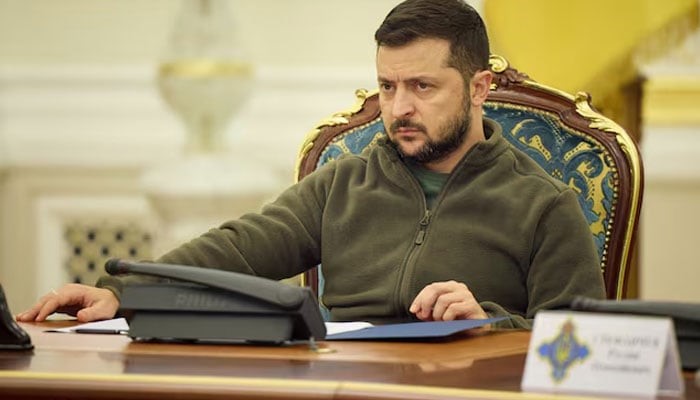
KYIV – Ukrainian President Volodymyr Zelensky has confirmed that a new round of peace negotiations with Russia is scheduled to take place in Istanbul on Wednesday. The announcement comes amid rising tensions and a grim outlook for progress following a series of previous talks that ended in stalemate.
A Turkish government spokesperson also verified that Istanbul will again host the discussions, marking a continuation of earlier efforts in May and June that failed to yield meaningful results.
The development comes shortly after a fresh wave of Russian missile and drone attacks hit Kyiv, igniting fires and damaging key infrastructure, including a metro station being used as a civilian air-raid shelter.
“Today, I spoke with Security Council Chief Rustem Umerov regarding preparations for a new exchange and the upcoming meeting in Turkey with the Russian side,” Zelensky said during his Monday address. “He informed me that the talks are scheduled for Wednesday.” Additional details are expected to be disclosed on Tuesday.
Russia has yet to officially confirm its participation in the talks. A senior Ukrainian official, speaking anonymously to AFP, said the discussions would likely focus on a potential prisoner swap and may also explore the possibility of a direct meeting between Zelensky and Russian President Vladimir Putin.
The two sides last met in Istanbul on May 16 and June 2, amid growing international pressure—especially from Washington—for a diplomatic resolution to the ongoing war, which began with Russia’s full-scale invasion in February 2022. However, those sessions resulted in little more than agreements on limited prisoner exchanges.
Since then, Russia has intensified its military campaign, capturing additional territory and escalating aerial assaults across Ukraine.
While both parties have exchanged views on potential frameworks for a peace deal, they remain deeply divided. Russia demands that Ukraine cede control of four occupied regions in addition to Crimea, which Moscow annexed in 2014. Furthermore, it insists Ukraine must drop its ambitions to join NATO. Kyiv has firmly rejected these terms and questions Moscow’s intentions regarding a ceasefire.
Kremlin spokesperson Dmitry Peskov acknowledged on Monday that the positions of the two countries remain “diametrically opposed,” noting that significant diplomatic hurdles remain before any agreement can be reached.
Adding to the pressure, former U.S. President Donald Trump has recently issued Russia a 50-day deadline to agree to a peace deal or face potential consequences, including renewed sanctions. Trump also stated that U.S. military aid to Ukraine would resume.
Escalation in Attacks on Kyiv
Russia’s latest statements were delivered following a major aerial assault on Ukraine’s capital. Ukrainian authorities reported that more than 450 drones and missiles—some hypersonic—were launched in a single night, in what Kyiv described as one of the most intense attacks since the war began.
According to President Zelensky, two people were killed in the assault, which he called an “attack on humanity.”
French Foreign Minister Jean-Noël Barrot arrived in Kyiv unexpectedly on Monday, touring areas hit by the bombardment and meeting with Zelensky to discuss air defence, sanctions, and weapons production.
Local officials said six districts of Kyiv were struck, resulting in fires at a supermarket, several residential buildings, and a nursery. Reporters on the ground observed shattered glass and debris strewn across affected areas, including damage to a metro station that had been serving as a bomb shelter.
“This station behind me, used as a refuge by Kyiv residents, has now become unsafe,” Barrot remarked during his visit.
The war has claimed tens of thousands of lives and displaced millions, with large portions of eastern Ukraine left in ruins. Russia maintains that its strikes were aimed at military targets and claimed responsibility for destroying three U.S.-made Patriot missile systems during the overnight bombardment.

About the Author