Pakistan’s Diplomacy Enters Most Active Phase: Ishaq Dar
“We’re not just reacting, we are shaping regional conversations and global dialogues”
ISLAMABAD: Deputy Prime Minister and Foreign Minister Senator Mohammad Ishaq Dar has described the current period as “one of the most active phases in Pakistan’s recent diplomatic history.”
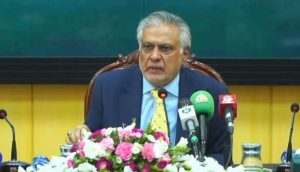
At a media briefing at the Foreign Office, Dar outlined the country’s wide-ranging diplomatic engagements during July and August, reflecting a foreign policy agenda centred on regional peace, global connectivity, economic revival, and principled stances on key international issues.
Pakistan at the UN Security Council
Dar highlighted Pakistan’s role as President of the UN Security Council in July, during which it chaired several important sessions, including one on Palestine. He termed the adoption of a unanimous resolution for peaceful conflict resolution under Pakistan’s leadership as a “major diplomatic achievement.”
Strengthening Ties with the United States
During his Washington visit, Dar met with US Secretary of State Marco Rubio on July 28 for what he described as a “frank and constructive” dialogue on bilateral, regional, and global issues.
He also addressed leading American think tanks, including the Atlantic Council, clarifying that his remarks on judicial independence were “misinterpreted by political actors” back home.
“The judiciary in Pakistan operates independently. Twisting English remarks for political mileage is unfortunate,” he said.
Palestine, OIC & the Greater Israel Plan
Reaffirming Pakistan’s unwavering support for Palestine, Dar recalled his participation in the France–Saudi co-hosted international conference and the OIC Emergency Foreign Ministers’ Meeting in Jeddah on August 25.
At the OIC, Pakistan categorically rejected the so-called ‘Greater Israel’ plan, calling it “illegitimate and unacceptable.”
Quiet Diplomacy in the Middle East
Dar disclosed Pakistan’s behind-the-scenes role during the Iran–Israel conflict, noting that Pakistan’s efforts of “sincere engagement” were acknowledged by Iran.
“Iranian parliamentarians chanted ‘Shukriya Pakistan’ in their assembly — that speaks volumes,” he remarked.
Regional Engagements: Afghanistan & Bangladesh
- On August 20, Dar joined Chinese and Afghan counterparts in Kabul for a trilateral dialogue. Talks covered refugees, border security, trade, and infrastructure, culminating in agreements on the Pakistan–Afghanistan–Uzbekistan railway and China’s agreement in principle to extend CPEC into Afghanistan.
- In Bangladesh (August 23–24), Dar met leaders from across the political spectrum, including the BNP and Jamaat-e-Islami, in what he termed a “rare full-spectrum diplomatic outreach.” Six MoUs were signed covering visa waivers, trade cooperation, and cultural exchange. He also renewed Pakistan’s call for SAARC’s revival, noting Bangladesh’s support but highlighting that “one state’s resistance remains a hurdle.”
UK, Europe, and the Pakistani Diaspora
Dar’s August 17–19 visit to the UK included meetings with Deputy Prime Minister Angela Rayner, senior parliamentarians, and the Commonwealth Secretary-General.
At the Pakistan High Commission in London, he launched diaspora-focused services such as digitised Punjab land records and a “One-Window” passport issuance system.
On aviation, Dar announced the lifting of UK flight restrictions on PIA, following the earlier removal of the EU ban in late 2024.
- Direct flights to Manchester will resume in September.
- A UK–Pakistan Business Advisory Council has been established to boost trade and investment flows.
Deepening Ties with China
Looking ahead, Dar revealed that Pakistan and China will celebrate 75 years of diplomatic relations in 2026, with a series of cultural and economic events planned.
He confirmed Beijing’s interest in agriculture, mining, and industrial investment, alongside the initiative of sending 1,000 Pakistani graduates to China for advanced agricultural education.
Reiterating Pakistan’s unwavering support for the One China Policy, he noted that China, in return, has remained consistent in backing Pakistan on Kashmir.
“Pakistan is Back on a Confident Diplomatic Track”
Summing up, Dar stressed that Pakistan’s diplomacy has entered a new, proactive phase:
“Whether in global peace forums, regional trade initiatives, or conflict mediation, Pakistan is not just reacting — we are shaping conversations.”
He added that the country’s foreign policy is “rooted in principle, backed by experience, and aligned with the aspirations of the Pakistani people.”
About the Author