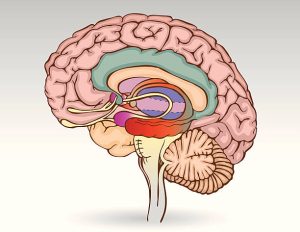
This is an illustration of the brain with the Limbic System drawn separately within the brain. The colors help to show the different parts of the Limbic System inside the brain. This will be useful as clip-art and for instructional materials.
Is Your Brain Ageing Faster Than You Think? Here’s How to Protect It
Is Your Brain Ageing Faster Than You Think? Here’s How to Protect It
By the time you reach 40, subtle changes begin to appear in your brain. You may misplace your grocery list, forget why you walked into a room, or find it harder to process information quickly. While such lapses are often brushed aside as signs of ageing, researchers say they don’t necessarily signal conditions like Alzheimer’s — which remain comparatively rare. Instead, they’re usually the result of natural declines in memory and processing speed.
“Most of the time, it’s just the brain getting older,” says Matt Huentelman, professor at the Translational Genomics Research Institute in Phoenix. Huentelman leads MindCrowd, a free online cognitive test taken by more than 700,000 adults, designed to study differences in brain performance.
Intriguingly, about a thousand participants performed like people decades younger — with brains that appeared “30 years fresher.” While genetics played a role, researchers found that lifestyle choices may be just as critical in preserving memory and mental agility.
At a recent brain ageing conference hosted by the McKnight Brain Research Foundation in Miami, experts pointed to a trio of habits that stand out: quality sleep, regular exercise, and avoiding smoking.
“High-quality sleep is essential for brain function,” explains Dr. Christian Agudelo, who studies sleep’s role in cognition. Going to bed and waking up at the same time every day, combined with staying socially and physically active, builds “sleep pressure” — helping the body enter deep, restorative rest.
Brain health is also closely tied to vascular health. Dr. Charles DeCarli of UC Davis has shown that conditions such as high blood pressure and diabetes can make the brain look significantly older, even in people without strokes or heart disease. “The size, shape, and tissue integrity of the brain age faster in people with these risk factors,” he notes. Encouragingly, his research suggests that when such conditions are well-managed, the brain can retain a younger, healthier appearance.
The message from scientists is clear: while we cannot stop time, we can influence how our brains age. By prioritising sleep, staying active, and protecting cardiovascular health, it may be possible not just to preserve memory — but to keep your brain decades younger than your birth certificate suggests.
About the Author