Water Terrorism: India’s Strategic Pressure on Pakistan Amid Flood Crises
Water is often called the lifeblood of nations, but in South Asia, it has increasingly become a source of strategic competition, conflict, and coercion. For decades, Pakistan and India have been bound by the Indus Waters Treaty (IWT) of 1960, a World Bank-brokered agreement that divided the rivers of the Indus Basin between the two countries. While the treaty is often hailed as one of the most durable water-sharing agreements in the world, recent developments suggest that India has repeatedly sought to exploit its upstream position to apply pressure on Pakistan. This phenomenon, often described as water terrorism, involves the deliberate manipulation of shared water resources in ways that harm Pakistan’s agriculture, economy, and human security.
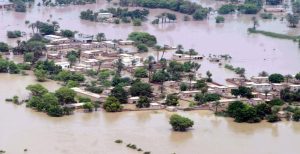
The issue has gained renewed urgency in light of the recent floods in Pakistan, which devastated millions of lives and livelihoods. For Pakistanis already struggling with climate-induced disasters, the fear that upstream water manipulation by India might worsen floods or deprive the country of water during droughts is deeply concerning. This article explores the roots, mechanisms, and consequences of water terrorism in South Asia, with a special focus on how India’s actions intersect with Pakistan’s flood vulnerabilities.
The Indus Waters Treaty: A Fragile Framework
The Indus Waters Treaty, signed in 1960, allocated the three eastern rivers (Ravi, Beas, and Sutlej) to India, and the three western rivers (Indus, Jhelum, and Chenab) to Pakistan. While the treaty permitted India limited use of western rivers for hydropower and agriculture under strict conditions, the western rivers were recognized as primarily belonging to Pakistan.
For decades, the treaty functioned as a stabilizer even during wars. However, in recent years, Indian leaders have threatened to “revisit” or even “abrogate” the treaty. Following the Uri attack in 2016, Indian Prime Minister Narendra Modi declared, “Blood and water cannot flow together,” signaling a more confrontational approach. Since then, India has accelerated dam and hydroelectric projects on the western rivers, raising fears in Pakistan about reduced water flows and violations of the treaty.
Forms of Water Terrorism
India’s alleged water terrorism against Pakistan manifests in several ways:
- Excessive Dam Building: India has constructed or initiated multiple hydroelectric projects on rivers flowing into Pakistan, such as the Kishanganga and Ratle projects. While India insists these comply with the treaty, Pakistan argues that their design and storage capacity give India the ability to manipulate water flows.
- Diversion and Manipulation of Flows: By releasing water during monsoon seasons or holding back water during dry periods, India can aggravate floods or intensify droughts in Pakistan. This manipulation of timing and volume undermines Pakistan’s agricultural cycle.
- Weaponization of Climate Stress: As Pakistan experiences more frequent floods and droughts due to climate change, India’s upstream control magnifies these vulnerabilities, turning natural disasters into geopolitical tools.
- Psychological Pressure: Statements by Indian leaders threatening to block or divert water serve as psychological warfare, deepening mistrust between the two nations and creating insecurity among Pakistani farmers and policymakers.
Pakistan’s Vulnerability: Agriculture and Energy at Risk
Pakistan is a predominantly agrarian country. More than 60% of its population depends directly or indirectly on agriculture, and the Indus Basin irrigates nearly 80% of Pakistan’s farmland. Even slight disruptions in water flows can have catastrophic effects on wheat, rice, and cotton production—the backbone of Pakistan’s economy.
Hydropower is another crucial sector. Many of Pakistan’s dams and power plants depend on predictable river flows. Manipulation of water upstream reduces Pakistan’s energy security, leading to blackouts and economic losses. In this sense, water terrorism not only impacts food production but also cripples Pakistan’s industrial output and overall growth trajectory.
Recent Floods: A Crisis Worsened by Mismanagement
In 2025, Pakistan once again faced devastating floods that displaced millions, destroyed crops, and damaged critical infrastructure. Climate change played a major role, as heavier-than-usual monsoon rains overwhelmed Pakistan’s drainage systems and flood defenses. However, Pakistani experts argue that sudden upstream releases of water by India during peak monsoon periods can exacerbate downstream flooding.
While definitive technical evidence is often difficult to obtain, the timing of certain water surges has fueled suspicions that India uses water releases as a pressure tactic. Whether deliberate or coincidental, the impact on Pakistan is the same: human suffering, economic destruction, and heightened political tensions.
These floods highlight Pakistan’s fragile position. Even without external interference, Pakistan lacks sufficient dams and reservoirs to store excess water during floods and release it during droughts. When coupled with upstream manipulation, this structural weakness becomes even more dangerous.
Water as a Weapon: Strategic Dimensions
Water terrorism is not only an environmental or humanitarian issue—it is a strategic weapon. Unlike conventional military aggression, water manipulation is harder to prove, harder to regulate under international law, and often disguised as “routine dam operations.” This ambiguity gives India leverage without the costs of open conflict.
By threatening Pakistan’s food and water security, India can exert pressure in negotiations, distract Islamabad from other strategic arenas, and weaken its internal stability. Given that Pakistan’s economy is already under strain from debt, inflation, and climate change, water insecurity could push the country into deeper crises.
International Law and Humanitarian Concerns
Under international law, shared rivers are governed by principles of “equitable and reasonable utilization” and “no significant harm.” If India manipulates water flows to the detriment of Pakistan, it violates both these principles. Moreover, the deliberate aggravation of humanitarian disasters—such as floods—by manipulating water is widely considered unethical and could be classified as a form of environmental warfare.
The global community, however, has been largely silent. While the Indus Waters Treaty still technically holds, disputes are often settled through lengthy arbitration processes. Pakistan has repeatedly sought international arbitration, but India has resisted, preferring bilateral dialogue that rarely leads to binding solutions.
The Human Dimension: Beyond Geopolitics
Behind the geopolitics of water lies a stark human reality. When floods strike, it is ordinary Pakistanis—farmers, women, and children—who suffer most. Homes are swept away, livestock is lost, and food insecurity spreads. In drought years, rural communities face crop failures, migration, and unemployment.
For these vulnerable populations, the question of whether India manipulates water flows is less important than the undeniable fact that they bear the consequences. Every time India accelerates dam projects or threatens to “use every drop” of eastern rivers, anxiety spreads across Pakistan’s rural heartlands.
What Pakistan Must Do
To counter water terrorism and climate-related water crises, Pakistan must adopt a comprehensive strategy:
- Diplomatic Engagement: Proactively raise water issues at international forums, linking them to climate justice and humanitarian concerns.
- Technical Preparedness: Invest in modern telemetry systems to monitor real-time river flows and detect upstream manipulations.
- Infrastructure Development: Build more dams and reservoirs to regulate water supply and reduce dependence on Indian-controlled flows.
- Legal Avenues: Continue to use international arbitration under the Indus Waters Treaty, while also exploring other legal channels under international water law.
- Public Awareness and Unity: Foster a national consensus on water security, emphasizing conservation, equitable distribution, and reduced wastage.

About the Author